Cold Chain Solutions without Limits

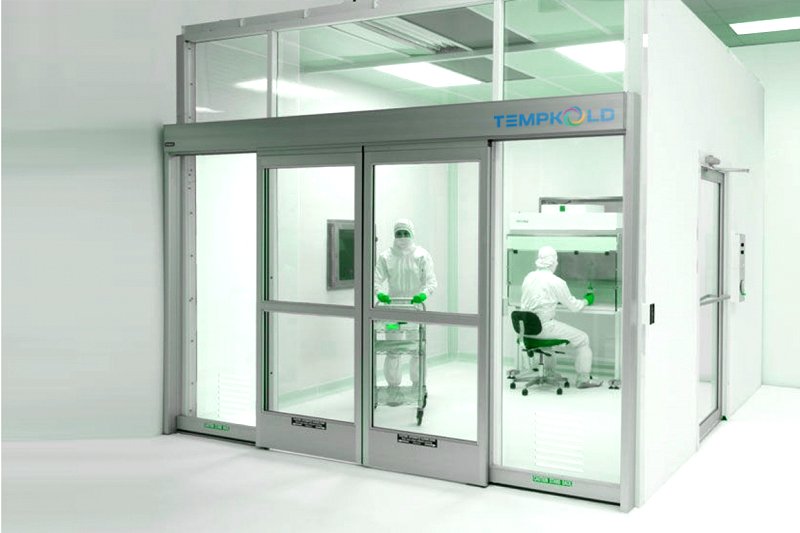
The Complete Guide to Modular Clean Room Solutions
Contamination can affect product quality, production efficiency, regulatory compliance, and overall operational performance. Industries such as pharmaceuticals, biotechnology, medical devices, electronics, food processing, laboratories, and precision manufacturing often require controlled environments where airborne particles, temperature, humidity, pressure, and personnel movement can be carefully managed.
A modular clean room provides a practical and flexible solution for creating these controlled environments. Unlike conventional clean rooms that are constructed as permanent parts of a building, modular clean rooms are assembled from prefabricated wall panels, ceilings, doors, flooring, filtration equipment, and mechanical systems. They can be installed inside an existing facility or designed as a dedicated controlled environment.
This guide explains modular clean room solutions, major design considerations, ISO classifications, applications, benefits, qualification requirements, and how businesses can select the right clean room supplier.
What Is a Modular Clean Room?
A modular clean room is a controlled environment constructed using factory-made components. Its primary purpose is to reduce contamination by controlling the concentration and movement of airborne particles within the space.
Depending on the application, a modular clean room may also control:
- Temperature
- Relative humidity
- Air pressure
- Airflow direction
- Microbial contamination
- Electrostatic discharge
- Chemical vapours
- Lighting and other environmental conditions
A clean room is not simply a room that looks clean. Its cleanliness must be measured and verified using recognised testing methods. ISO 14644-1 classifies clean rooms based on airborne particle concentration, making cleanliness a measurable performance requirement rather than a visual standard.
Modular vs. Traditional Clean Room Construction
Traditional clean rooms are generally constructed using permanent building methods. Walls, ceilings, mechanical services, and finishes are installed directly into the facility. Future expansion or relocation can therefore require significant renovation or demolition.
Modular clean rooms use prefabricated components that are manufactured and assembled at the project site. This approach can provide several advantages.
Faster Installation
Modular components can be manufactured while site preparation is taking place. Multiple project activities can therefore proceed simultaneously, potentially reducing overall installation time.
Easier Expansion
Modular wall panels, ceilings, support structures, airlocks, and production areas can often be modified or extended as production requirements change.
Consistent Quality
Factory-produced panels and components can provide consistent dimensions, surface finishes, and joint quality.
Reduced Operational Disruption
Modular systems can often be installed inside operating facilities with less dust, debris, and construction activity than conventional building methods.
Potential Relocation
Depending on the system design, some modular clean rooms can be disassembled and moved to another area or facility.
However, modular construction is not automatically the best choice for every project. Large or highly specialised facilities may benefit from a combination of permanent and modular construction. The right solution depends on process requirements, building conditions, regulations, and long-term production plans.
Types of Modular Clean Rooms
Different clean room configurations are available depending on cleanliness requirements, process risks, available space, and budget.
Hardwall Modular Clean Rooms
Hardwall clean rooms use rigid wall panels, framed doors, and sealed ceilings. Panels may be manufactured from insulated metal, stainless steel, aluminium composite, high-pressure laminate, or other cleanable materials.
They are commonly used when a facility requires:
- Stable room pressure
- Controlled temperature and humidity
- Higher cleanliness classifications
- Durable and washable surfaces
- Controlled personnel and material movement
- Long-term production use
Hardwall systems are particularly suitable for pharmaceutical manufacturing, medical-device production, biotechnology, and precision assembly.
Softwall Clean Rooms
Softwall systems use flexible curtains suspended from a metal frame, with filtered air commonly supplied through fan filter units.
They can be appropriate for less demanding applications such as electronics assembly, optical inspection, product packaging, small laboratory processes, and temporary controlled work areas.
Softwall systems can be faster to install, but they generally provide less structural separation and environmental stability than hardwall systems.
Rigidwall and Portable Clean Rooms
Rigidwall systems use solid or transparent rigid panels fixed to a structural frame. They provide greater enclosure than softwall systems while maintaining flexibility.
Portable clean rooms may be supplied as compact prefabricated modules, skid-mounted systems, or other movable configurations. They can support temporary production, laboratory projects, remote operations, testing, and changing production requirements.
For smaller applications, clean booths, pass-through chambers, laminar-flow enclosures, and machine mini-environments may provide targeted contamination control without requiring a complete room.
Understanding ISO Clean Room Classifications
The ISO 14644 series provides internationally recognised guidance for clean rooms and associated controlled environments.
ISO 14644-1: Air Cleanliness Classification
ISO 14644-1 classifies clean rooms according to airborne particle concentration. The classification system ranges from ISO Class 1 through ISO Class 9, with lower class numbers representing tighter particle control.
A more demanding classification generally requires greater filtration performance, airflow control, cleaner construction materials, stricter gowning procedures, monitoring, and operational discipline.
The required ISO class should be selected according to the product, process, contamination risk, and applicable regulations. Selecting an unnecessarily strict classification can increase both capital and operating costs.
ISO 14644-2: Monitoring
ISO 14644-2 addresses monitoring plans related to air cleanliness by particle concentration. Monitoring may consider production locations, sampling frequency, alert and action limits, occupancy, process risk, historical performance, and corrective actions.
ISO 14644-3: Testing
ISO 14644-3 provides clean room testing methods. Testing can include airborne particle counting, airflow measurement, room-pressure testing, HEPA filter integrity testing, airflow visualisation, temperature and humidity verification, and recovery testing.
ISO 14644-4 and ISO 14644-5
ISO 14644-4 addresses clean room design, construction, and start-up. ISO 14644-5:2025 addresses operational control programmes, including personnel, entry and exit, materials, cleaning, maintenance, and monitoring.
These standards demonstrate that clean room performance depends not only on construction but also on testing, operation, maintenance, and monitoring.
Key Clean Room Design Considerations
A successful modular clean room should be designed around the actual process rather than simply the available floor space.
1. User Requirement Specification
A User Requirement Specification (URS) defines what the clean room must achieve. It should consider:
- Product and process type
- Target ISO classification
- Room dimensions
- Number of operators
- Equipment heat loads
- Temperature and humidity requirements
- Pressure relationships
- Cleaning requirements
- Utilities
- Applicable regulations
- Qualification requirements
- Future expansion
A clear URS helps reduce design changes, incorrect equipment sizing, and unnecessary project costs.
2. Layout and Process Flow
Personnel, raw materials, finished products, waste, and maintenance activities should follow planned routes. Depending on the project, the layout may include personnel entrances, change rooms, gowning rooms, airlocks, material airlocks, pass-through chambers, processing rooms, packaging areas, and waste routes.
The goal is to reduce unnecessary movement and prevent contamination from spreading between controlled areas.
3. Airflow and Filtration
Airflow is a critical part of contamination control. Non-unidirectional airflow mixes filtered air throughout the room and is commonly used for moderate classifications. Unidirectional airflow moves filtered air in a controlled direction and may be used where stronger particle control is required.
HEPA filters are widely used in clean room systems, while more demanding applications may use ULPA filtration. Filter selection should consider efficiency, pressure drop, airflow capacity, maintenance access, and process compatibility.
4. Temperature, Humidity and Pressure
Temperature and humidity should be controlled according to product requirements, process stability, worker comfort, and contamination risks.
Clean rooms may operate under positive or negative pressure. Positive pressure can help protect products from surrounding contamination, while negative pressure can help contain hazardous particles or substances.
5. Panels, Flooring, Doors and Utilities
Clean room surfaces should be smooth, durable, non-shedding, and easy to clean. Common panel materials include powder-coated steel, stainless steel, aluminium composite, high-pressure laminate, and other project-specific materials.
Flooring may include seamless epoxy, polyurethane, welded vinyl, conductive flooring, or raised-access flooring.
Doors should close securely and help maintain pressure. Depending on the application, facilities may use swing doors, sliding doors, automatic doors, fire-rated doors, hermetically sealed doors, or high-speed doors.
Utilities may include electrical connections, compressed air, process gases, vacuum, purified water, data connections, drainage, fire-alarm systems, and environmental sensors.
Applications of Modular Clean Room Solutions
Modular clean rooms serve a broad range of industries.
Pharmaceutical Manufacturing
Pharmaceutical clean rooms can support sterile manufacturing, aseptic filling, compounding, tablet and capsule production, raw material dispensing, sampling, packaging, and quality control activities. Projects may need to consider FDA cGMP requirements, aseptic-processing guidance, WHO GMP guidance, and other applicable regulatory requirements.
Biotechnology and Life Sciences
Biotechnology applications include cell-culture work, vaccine research, bioprocessing, diagnostics, gene and cell therapy, protein development, and controlled sample preparation. These facilities may require segregation, controlled material transfer, specialised decontamination, and additional biosafety measures.
Medical Device Manufacturing
Clean environments can support the manufacturing and assembly of surgical instruments, catheters, implants, syringes, diagnostic devices, wound-care products, medical tubing, and single-use components.
Electronics and Semiconductor Manufacturing
Small airborne particles can negatively affect sensitive electronic components. Clean rooms can support semiconductor fabrication, circuit-board assembly, sensor production, battery components, optical devices, data-storage products, and precision electronics.
Humidity and electrostatic-discharge control may also be important.
Food and Beverage Processing
Controlled environments can help protect sensitive food products against dust, microorganisms, and cross-contamination. Applications may include dairy processing, ready-to-eat foods, beverage filling, food powders, nutraceuticals, and aseptic packaging. Not every food application requires an ISO-classified clean room. In some situations, a hygienic high-care environment may be more appropriate.
Laboratories, Healthcare, Cosmetics and Other Industries
Modular clean rooms can also support research laboratories, clinical testing, hospital pharmacies, sterile compounding, cosmetics manufacturing, personal-care products, aerospace applications, automotive electronics, and battery manufacturing. The required environmental controls should always be selected according to the specific process and regulatory requirements.
Benefits of Modular Clean Room Solutions
The main advantages include:
- Faster project delivery
- Flexible configuration
- Easier future expansion
- Consistent factory-made finishes
- Easier cleaning and maintenance
- Improved contamination control
- Potentially better energy management
- Reduced disruption to existing operations
- Professional and organised production environments
A correctly designed modular clean room can provide the required level of environmental control without unnecessarily conditioning a larger building area.
Clean Room Qualification and Validation
Installation is only one stage of a clean room project. Testing and qualification are necessary to confirm that the system meets its defined requirements.
Qualification may include:
- Design Qualification (DQ): Confirms that the design addresses approved requirements.
- Installation Qualification (IQ): Verifies that equipment, panels, filters, instruments, and utilities have been installed correctly.
- Operational Qualification (OQ): Confirms that the clean room operates correctly under specified conditions.
- Performance Qualification (PQ): Demonstrates that the facility performs as required during normal operation.
Testing should use calibrated instruments and documented procedures. Test reports, certificates, drawings, and related records should be maintained as part of the facility’s quality documentation.
How to Choose a Modular Clean Room Supplier
A clean room supplier should offer more than panels and filters. Before selecting a partner, consider whether they can provide:
- Process consultation
- Site assessment
- Concept and detailed design
- HVAC engineering
- Electrical and controls design
- Clean room panels and doors
- Filtration systems
- Installation
- Testing and commissioning
- Qualification support
- Documentation
- Operator training
- Maintenance services
- Future expansion support
The supplier’s proposal should clearly explain project scope, inclusions, exclusions, technical requirements, and customer responsibilities.
Why Choose TEMPKOLD for Modular Clean Room Solutions?
TEMPKOLD develops modular controlled-environment solutions for businesses that require reliable, clean, and efficient production spaces.
Depending on project requirements, TEMPKOLD solutions can include:
- Site evaluation
- Conceptual and detailed layouts
- Modular wall and ceiling panels
- Clean room doors and observation windows
- HVAC and filtration systems
- HEPA fan filter units
- Temperature and humidity control
- Pressure-monitoring systems
- Electrical and lighting systems
- Control panels
- Flooring recommendations
- Airlocks and pass-through chambers
- Installation and commissioning
- Performance testing
- Operation and maintenance documentation
Every project should begin with a technical review. The objective is not simply to build the cleanest possible room, but to create the appropriate contamination-control environment for the process while avoiding unnecessary complexity and operating costs.
Frequently Asked Questions
How much does a modular clean room cost?
Cost depends on room size, ISO classification, panel materials, HVAC capacity, filtration, temperature and humidity requirements, utilities, monitoring systems, and qualification requirements. A site assessment and detailed user requirements are needed for accurate pricing.
How long does installation take?
Installation time depends on room size, engineering requirements, manufacturing, site preparation, equipment lead times, installation, and qualification. Smaller projects may be completed more quickly than large pharmaceutical or industrial facilities.
Can a modular clean room be expanded?
Yes. Expansion is one of the important benefits of modular construction. However, future HVAC, electrical, structural, and process requirements should be considered during the original design.
Can an existing room be converted into a clean room?
In many cases, yes. The existing facility should first be evaluated for ceiling height, structural support, utilities, drainage, access, fire safety, and HVAC capacity.
Is a clean room the same as a sterile room?
No. A clean room controls airborne particles and other environmental conditions. Sterility refers to the absence of viable microorganisms. A clean room can support sterile processing, but the room itself does not make a product sterile.
What ISO clean room class do I need?
The correct ISO classification depends on the product, manufacturing process, contamination risk, and applicable regulations. Qualified clean-room engineers and the relevant quality team should review the process.
Conclusion
A modular clean room is more than an enclosed space with filtered air. It is an integrated contamination-control environment combining architectural construction, HVAC engineering, filtration, pressure management, personnel flow, material flow, cleaning procedures, testing, and ongoing monitoring.
The best clean room is not necessarily the largest or the highest-classified facility. It is the solution that provides the appropriate level of contamination control for the process, supports applicable standards, protects product quality, and remains practical to operate and maintain.
Whether your application involves pharmaceuticals, biotechnology, medical devices, food processing, electronics, laboratories, aerospace, cosmetics, or precision manufacturing, modular clean room construction can provide a flexible path toward a controlled production environment.
Planning a new modular clean room or upgrading an existing controlled environment? Contact TEMPKOLD for a project review, concept layout, and customised technical proposal.
Post A Comment